Cash, Cards, and Courtesy: A Gratuity Primer for Tbilisi Bathhouses and Spas
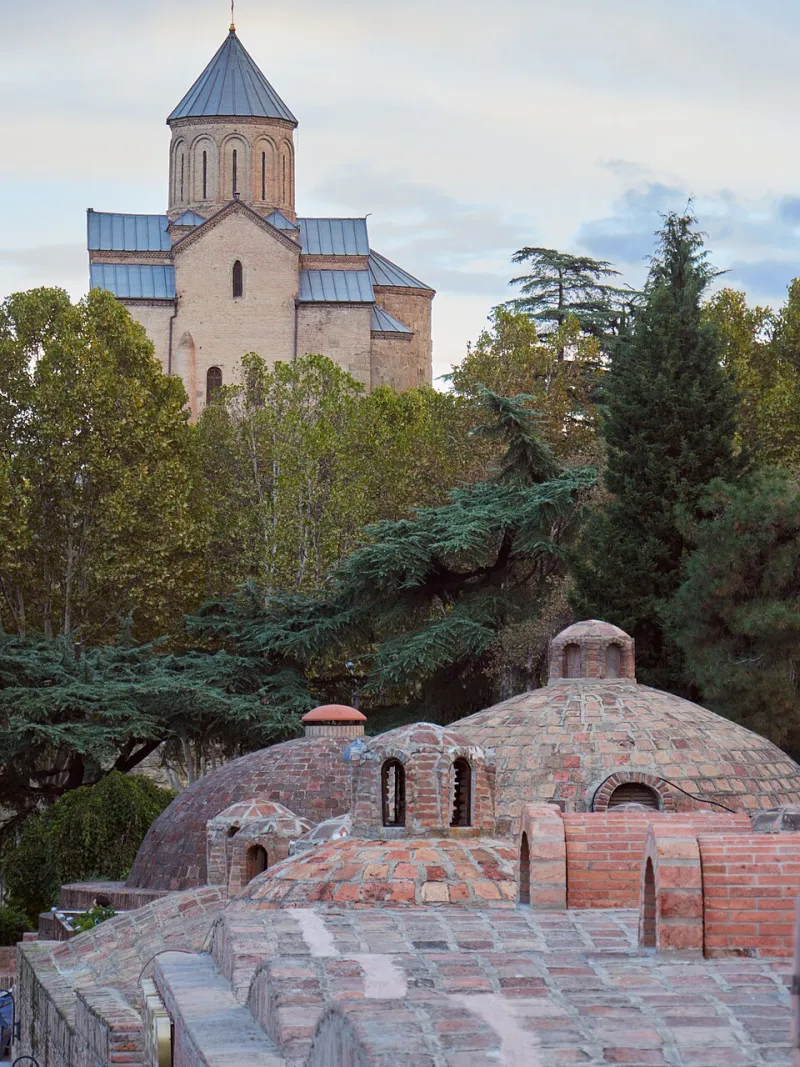
Photo: lumoplank, CC0, via Wikimedia Commons
If you've ever stood in a Tbilisi bathhouse lobby clutching a damp 20-lari note, unsure whether to press it into someone's hand or leave it on a bench, you already know the problem. American tipping instincts are loud. Georgian tipping norms are quiet. The mismatch is where the awkwardness lives.
The good news: nobody in Tbilisi is going to chase you down for a gratuity. The bad news: that silence can leave US travelers either overpaying out of guilt or walking out unsure whether they just committed a small social crime. Here's the middle path.
Start with the baseline: tipping is optional, not invisible
In Georgia, gratuity is a gesture, not a line item baked into the culture the way it is back home. Staff don't depend on it the way a US server depends on 20 percent. That doesn't mean it's unwelcome — it absolutely is — but the amounts are smaller and the expectation is softer.
What this means practically: a 5–10 percent tip reads as generous. A flat 20 percent doesn't offend anyone, but it can mark you as a tourist who hasn't looked around, and it nudges prices up for the locals behind you. Calibrate, don't flex.
Where a service charge is already hiding
This is the single most useful thing to know before you open your wallet.
At hotel spas and larger day spas in Tbilisi, a service charge of around 10 percent is often folded into the bill — sometimes labeled in Georgian as მომსახურება (service). If you see it, you're done. Adding another 15 percent on top is not generosity, it's double-dipping.
Restaurants attached to spas and bathhouse cafés frequently add 10–15 percent as well, especially in tourist-heavy districts. Small, owner-operated massage studios usually don't add anything.
You can't always tell from the receipt, so ask. It's a completely normal question here, and no one will think less of you for it.
The bathhouse has its own logic
Sulfur bathhouses in Abanotubani run on a different economy than a spa reception desk, and this is where most US travelers get confused.
The private room. You rent a room by the hour. The price is the price. No tip required. If the attendant hauled in extra towels, scrubbed the tub down twice, and hunted down a hairdryer for you, a couple of lari on the way out is a nice touch.
The scrub. This is the one to plan for. The kisa (the rough glove scrub) is usually offered by an attendant as an add-on service, and it is genuinely one of the best things you can do for your skin in this city. Tip the person who scrubbed you directly — 5 to 10 lari per person, handed over at the end, ideally in notes.
The towel desk. Two or three lari is plenty. Coins are fine in theory but read as an afterthought; small notes land better.
One cultural note: handing money directly to a person is normal and not rude. You don't need an envelope, a tray, or a little ceremony. A simple 'madloba' (thank you) and a folded note is exactly right.
Studios and hotel spas: the practical split
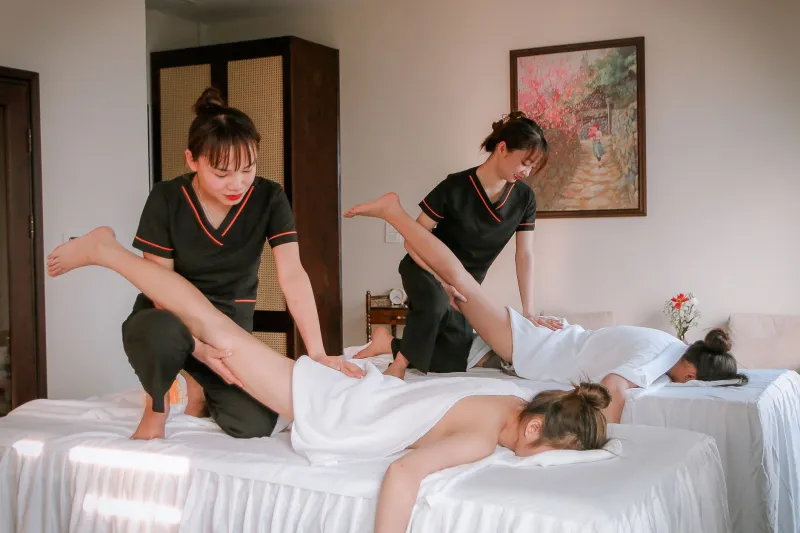
For a standalone massage studio, typical 60-minute sessions in Tbilisi run somewhere between 80 and 160 lari depending on the neighborhood and the therapist's experience. A tip of 5–10 percent, or simply rounding up to the next round number, is the local sweet spot. If your therapist spent extra time on a specific problem, say so out loud and add a few lari — verbal specificity is appreciated here, and the extra note confirms you meant it.
At hotel spas, check the bill first. If a service charge is there, stop. If it isn't, 5–10 percent is right, and front-desk staff will usually tell you whether the therapist takes tips directly or whether it goes into a shared pool.
A rough map for 2026
| Situation | Customary gratuity |
|---|---|
| Bathhouse scrub attendant (kisa) | 5–10 lari per person |
| Bathhouse room, no extra service | Nothing, or 2–5 lari |
| Towel or slipper attendant | 2–3 lari |
| Neighborhood massage studio | 5–10 percent, or round up |
| Hotel spa with service charge | Nothing extra |
| Hotel spa without service charge | 5–10 percent |
For context, one lari sits at roughly a third of a dollar, so 10 lari is a little under four bucks. That's a meaningful thank-you here, not a rounding error.
Card or cash?
Cards are accepted almost everywhere in Tbilisi now — studios, hotel spas, most bathhouse front desks. But tipping on a card is clunky. Terminals often don't offer a tip prompt, and staff may have to void and re-run the transaction, which nobody enjoys.
Bring a handful of 5, 10, and 20 lari notes. ATMs are everywhere and dispense lari, not dollars. Skip the 1-lari coins for tips — they're legal tender but they read as loose change, and you don't want your thank-you to sound like jingling.
Scripts that keep it smooth
These four sentences will cover almost any situation you run into:
- 'Is service included in this price?'
- 'I'd like to leave something for the therapist — do I give it to you or at the desk?'
- 'Can I add a tip to the card, or is cash easier?'
- 'That was excellent — thank you.' (Said before you hand anything over. It matters more than the amount.)
Notice that none of them apologize. US travelers tend to over-explain — 'sorry, I just want to make sure I'm doing this right' — which turns a small kindness into a whole production. Ask plainly, then move on.
Two habits worth unlearning
The guilt tip. If the service was mediocre, you don't owe 18 percent. A small note and a polite word is fine. Tbilisi's service culture is warm but not performative, and no one expects an American-style percentage.
The public flourish. Handing over a large note in a crowded lobby draws attention nobody asked for. Keep it quiet, keep it folded, keep it brief.
The bottom line
Tipping in Tbilisi is a handshake, not a contract. Carry small notes, ask about service charges before you add anything, tip the person who actually touched your muscles, and treat the whole thing as a small courtesy rather than an obligation. Do that, and the only thing left to worry about is whether you booked the scrub before or after the soak. (After. Always after.)